
GAMALS 2026 Celebrates Prof. G.A. Makanjuola at 90 as Agricultural Engineering Takes Centre Stage in Nigeria’s Food Security Agenda
The maiden Emeritus Professor Gabriel Ayodele Makanjuola Lecture Series (GAMALS) has celebrated the remarkable legacy of one of Nigeria’s foremost agricultural engineering pioneers, while providing a national platform for renewed commitment to mechanisation, innovation and technology-driven agricultural transformation.
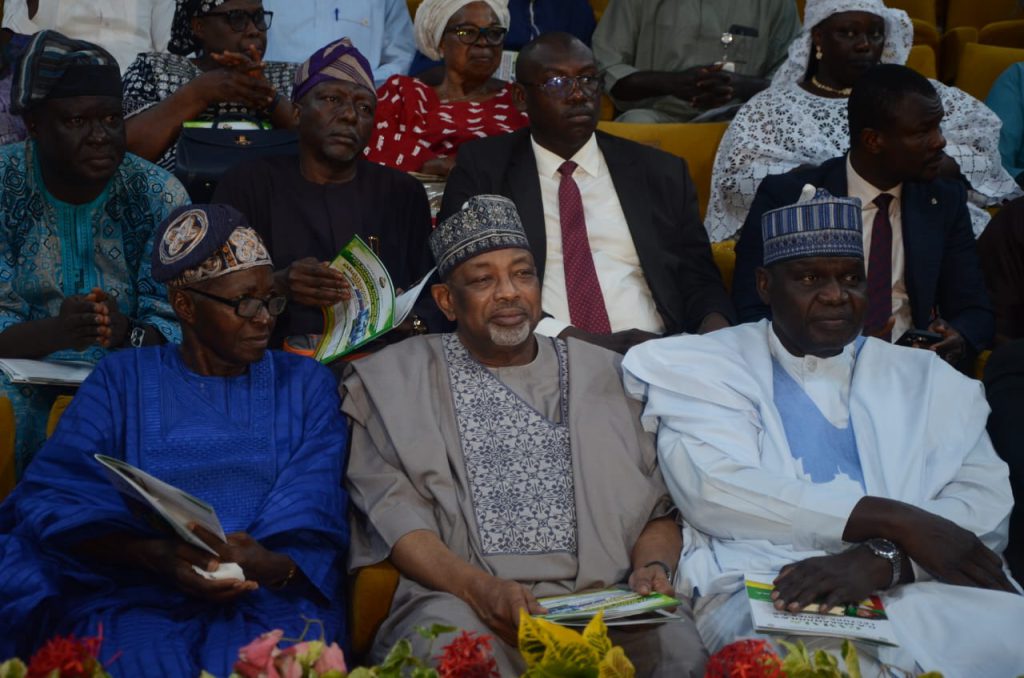
The historic event, held on 30 June 2026 at the Oduduwa Hall, Obafemi Awolowo University (OAU), Ile-Ife, was organised in honour of Emeritus Professor Gabriel Ayodele Makanjuola, widely recognised as Nigeria’s first Agricultural Engineer and one of the most influential figures in the development of agricultural engineering in the country.
The maiden lecture series formed part of activities marking the 90th birthday of Professor Makanjuola, celebrating a distinguished lifetime of scholarship, engineering innovation, leadership and service to Nigeria.
Celebrating a Pioneer of Agricultural Engineering
For the Nigerian Institution of Agricultural Engineering (NIAE), GAMALS represents much more than the celebration of an eminent engineer. It is a celebration of the history, relevance and future of the agricultural engineering profession in Nigeria.
Professor Makanjuola’s career demonstrates the enormous contribution agricultural engineers can make to national development when engineering research is directed towards solving practical agricultural and food-processing challenges.
His pioneering work in agricultural mechanisation, food processing and post-harvest engineering produced innovations of international significance, including inventions for which he secured British patents. Among his best-known contributions is his pioneering work on mechanised yam pounding — an innovation aimed at applying engineering to an everyday food-processing challenge.
His accomplishments helped demonstrate, at an early stage in Nigeria’s development, that indigenous engineering research could produce practical technologies suited to local needs.
GAMALS therefore provides a platform not only to preserve this important legacy but also to inspire succeeding generations of agricultural engineers, researchers, students, innovators and policymakers.
Federal Government Reaffirms Strategic Role of Agricultural Engineering
A major highlight of the event was the address by the Honourable Minister of Agriculture and Food Security, Senator Abubakar Kyari, CON, who underscored the increasingly important role of agricultural engineering and mechanisation in Nigeria’s agricultural transformation agenda.
The Minister declared that agricultural engineering has moved beyond being regarded merely as a supporting discipline and has become a strategic pillar of national transformation.
He further stressed that agricultural mechanisation must reach beyond large commercial farms to Nigeria’s millions of smallholder farmers, whose productivity remains fundamental to national food security.
Under the Federal Government’s agricultural transformation agenda, mechanisation is being positioned as an instrument for increasing productivity, reducing human drudgery and expanding farmers’ access to appropriate technologies.
The Minister also highlighted the importance of the Special Agro-Industrial Processing Zones (SAPZ) initiative, which seeks to locate processing and value-addition infrastructure closer to agricultural production clusters. Such an approach has the potential to reduce post-harvest losses, strengthen agricultural value chains and transform primary agricultural produce into higher-value products.
A Powerful Message for the Agricultural Engineering Profession
The discussions at GAMALS reinforce a position that NIAE has consistently championed: Nigeria cannot achieve sustainable food security without engineering.
The challenges facing Nigerian agriculture — from low levels of mechanisation and post-harvest losses to irrigation, processing, storage, renewable energy, climate resilience, digital agriculture and value-chain development — require strong agricultural engineering solutions.
For agricultural engineers, this presents both an opportunity and a responsibility.
The next generation of professionals must build upon the foundations established by pioneers such as Professor Makanjuola by developing technologies that are affordable, locally adaptable, environmentally sustainable and capable of addressing the realities of Nigerian farmers and agro-industries.
The agricultural engineer of the future must also work at the intersection of traditional engineering and emerging technologies, including automation, precision agriculture, artificial intelligence, Internet of Things (IoT), remote sensing, robotics, renewable energy and data-driven farm management.
From Legacy to the Future
The establishment of the Emeritus Prof. G.A. Makanjuola Lecture Series provides an important platform for connecting the history of agricultural engineering in Nigeria with the future of the profession.
Professor Makanjuola’s journey demonstrates what is possible when engineering knowledge is combined with innovation, practical problem-solving and commitment to national development.
As Nigeria intensifies efforts towards mechanisation, agro-industrialisation and technology-driven agriculture, the agricultural engineering profession will become even more critical to achieving the country’s food security and economic development objectives.
The Nigerian Institution of Agricultural Engineering (NIAE) celebrates Emeritus Professor G.A. Makanjuola at 90 and commends the vision behind the establishment of GAMALS.
His extraordinary legacy remains an inspiration to agricultural engineers across generations and a reminder that some of the most transformative solutions to Nigeria’s agricultural challenges can emerge from engineering innovation designed around the realities of our people.
At 90, Emeritus Professor G.A. Makanjuola represents not only an outstanding chapter in the history of Nigerian agricultural engineering, but also a powerful inspiration for its future.
Long live GAMALS. Long live Agricultural Engineering. Long live NIAE.